An error has occurred. Please try again.

Loading...
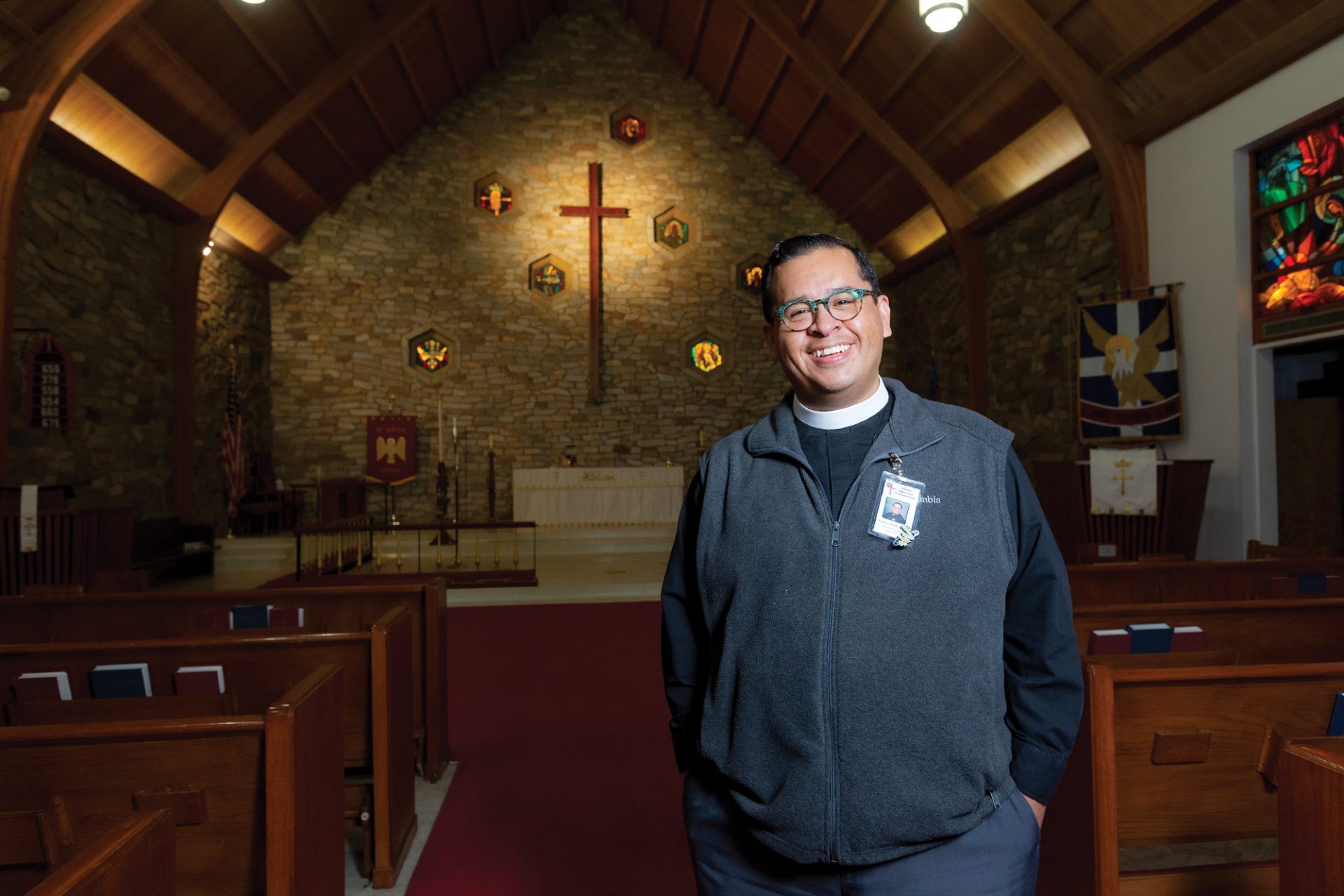
As we all may know, there are various vocations that spring forth from our Baptismal call. These vocations can take on any number of shapes and sizes according to the person accepting the vocation. In a ecclesiastical setting, when we hear vocation, we think of the priesthood or the diaconate. These are two unique vocations that require much discernment, honesty and preparation.
In this understanding of vocation, there is another one that can often be confused with the ordained ministry. This other vocational call is to the religious life.
For centuries, people have gathered in community or under a common rule of life to live out their understanding of what it means to be a follower of Christ. From the desert Fathers and Mothers, some of whom isolated themselves to draw closer to God, there was an understanding that Religious Life was one way of living the Gospel according to their Charisms (movements of the Spirit).
Even after the dissolution of convents and monasteries after Henry VIII broke from the Roman Church, there were groups of people who united to live under the model of common life that is laid out in the Acts of the Apostles.
From these early movements in the Anglican Church, more established communities started forming, especially in the United States after the development of the Episcopal Church. Among the various communities that formed, especially during the 19th century, some, such as the Community of St. Mary, gave a new way of living out the faith and one’s call in the Episcopal Church. These orders, especially the women’s orders, often gave place for women to take more active roles in the church, before women’s ordination. Some have even said that the models established by the Sisters and Nuns were the prototype for women’s ordination.
Today, there are many different “flavors” of religious orders in the Episcopal and Anglican Churches. These different groups are as diverse as the people in the church, but they represent a viable option for people discerning their own call to follow Christ. Among these different groups, there are some that live together in community, such as the Order of St. Julian of Norwich or the Brothers of St. John the Evangelist, and there are orders that consider themselves “dispersed.” This means that there is no common house from which the order emerges, instead, these dispersed orders often meet once a year to spend time together in community.
In my own journey, I have found that the rule of life that is established by the order to which I belong, which is the Ecumenical Order of Charity, provides a structure that allows me to focus on God as I prepare to serve those to whom I am sent. I am glad to be a part of this order and as I have met other men and women who belong to different communities, I hear a sense of joy in their own discernment and participation in a religious community.
In all of this, it is important to recognize that just as God calls people to the priesthood or the diaconate, God also calls people to the different communities that have been established to respond to God’s call in various way.
Perhaps God is calling you to a religious vocation, if so, I invite you to reach out and start a conversation. Below, there are a few links to the websites for the orders in the Episcopal Church. I pray that perhaps you may hear that call and serve in love and grace. God bless you and remember that you are beautiful, and you are loved.